• Skip to primary navigation
  • Skip to main content

TEDxSalem

Ideas worth spreading

  • Facebook
  • Instagram
  • Twitter
  • Home
  • Attend
    • TEDxSalem VII
  • About
  • Artist in Residence
  • Blog
  • Partners
  • Past TEDxSalem events
    • TEDxSalem VI
    • TEDxSalem V
    • TEDxSalem IV
    • TEDxSalem III
    • TEDxSalem II
    • TEDxSalem I

2013 TEDxSalem

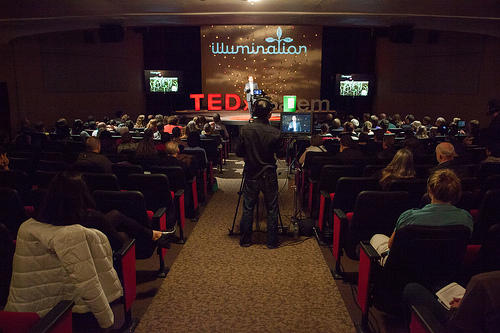
TEDxSalem photos are up!

November 23, 2013 By Saerom

By Frank Miller
By Frank Miller

Hel­lo, TEDx­ers!

I come to you with cof­fee by the lap­top in my won­der­ful TEDxSalem mug, hum­ming “Illu­mi­nate Me,” since that lit­tle dit­ty has not got­ten out of my head since OSU Glee direc­tor James David­son took the Grand The­atre stage one week ago.

What an amaz­ing day it was. I miss it. Don’t you?

Well, we have some­thing that will hope­ful­ly tide you over until we release the videos of our TEDx talks.

PHOTOS!

Thank­ful­ly, we had Ron Coop­er and Frank Miller donate their time and tal­ents to doc­u­ment the epic day. The beau­ti­ful stage, our speak­ers, our break­out ses­sions were all cap­tured.

So, go on, check them out and feel free to share them with your friends. And be sure to check back because we have more com­ing!

Filed Under: 2013 TEDxSalem

Speaker announcement: Why are the Millennials the freaking worst?

November 5, 2013 By Saerom

Kelly and me, Fourth of July weekend in Lincoln City two years ago.
Kel­ly and me, Fourth of July week­end in Lin­coln City two years ago.

Guys, it’s time to get real.

In the jour­nal­ism world, this would be an edi­tor’s note.

I, Saerom Yoo, TEDxSalem sto­ry­teller, here­by dis­claim that the speak­er I will now announce is a dear friend and for­mer col­league of mine. There­fore, I found it awk­ward and dis­hon­est to approach today’s post like any oth­er speak­er announce­ment.

I have a clear bias toward Kel­ly Williams Brown. I think she’s hilar­i­ous, tal­ent­ed and bril­liant. So we tried some­thing dif­fer­ent for her speak­er announce­ment. Since our main form of com­mu­ni­ca­tion is the “geech,” or “G‑chat,” we thought we’d let you in on our friend-to-friend, no‑B.S. con­ver­sa­tion.

Some con­text: Kel­ly was a news­pa­per reporter, sev­er­al of those years as the enter­tain­ment reporter at the States­man Jour­nal. That’s where we met. I also am a reporter at the States­man Jour­nal. This spring, Kel­ly made her debut as an author with “Adult­ing.” Ever heard of it? It’s only a best­seller.

At TEDXSalem, Kel­ly will be back to the town where her fame began — the town she wrote much of Adult­ing — to talk about how our gen­er­a­tion, the Mil­len­ni­als, are the worst. Just kid­ding. She’ll be address­ing those many arti­cles that you may have read about how those in their teens and 20s are basi­cal­ly lazy, self­ie-tak­ing leech­es and the poten­tial dam­ages of that type of gen­er­al­iza­tion.

With­out fur­ther ado, I give you TEDxSalem’s first G‑chat inter­view, edit­ed for length:

Saerom: Do you remem­ber the first words you said to me in Decem­ber of 2010?

Kel­ly:  Whoa. Um … hrm. Was it about red lip­stick or kit­tens?

Saerom:  No, haha­ha

I was at the SJ for my inter­view

and you warned me very seri­ous­ly that “there are no guys here”

Kel­ly:  HA. I real­ly hope those weren’t my very first words … I hope I at least intro­duced myself before drop­ping that truth bomb on you.

Although I can see myself kind of leer­ing out of a door­way and yelling that.

Saerom:  Yeah you prob­a­bly did.

Do you remem­ber that point of your life? three years ago? Where were you in your jour­ney?

Kel­ly:  You know, three years ago I was in this (rel­a­tive­ly, for me) intense peri­od. I was writ­ing con­stant­ly, both for the States­man Jour­nal and on my own time, and feel­ing that sort of rest­less anx­ious­ness that comes when you know that some­thing will be chang­ing for you soon, but you’re not sure what or when.

But on the oth­er hand, I was deeply deeply invest­ed in and lov­ing my job at the States­man Jour­nal (despite the dearth of dat­ing oppor­tu­ni­ties). Edi­tors Michelle Maxwell and Bill Church, who I con­sid­er my men­tors, were let­ting me do some real­ly weird and unortho­dox things.

Saerom:  Yeah, you know I’ve had the same kind of sup­port. The SJ is a spe­cial, spe­cial place for young, hard-work­ing peo­ple will­ing to do some crazy things.

Kel­ly:  It IS!

It’s incred­i­ble. I know this is kind of a sil­ly Bay Area-sound­ing thing to say, but it feels like an incu­ba­tor

Every­one is work­ing real­ly, real­ly hard, and every­one is cog­nizant of the fact that the indus­try is chang­ing and we have to do some­thing new

So as long as you’re get­ting your (immense) work­load done, there is a lot of free­dom there

Saerom:  Yep. And a lot of laugh­ter. So much laugh­ter. Which is so pre­cious.

At that time (again three years ago), did you know “Adult­ing” was on your hori­zon? Or some sort of book?

Kel­ly:  You know, I hoped there was a book on my hori­zon but I real­ly had no idea what it would be. I don’t write fic­tion; I’m not the kind of seri­ous per­son who can real­ly go in-depth on a seri­ous top­ic

So if you had told me, “Hey, you’re going to write a book!” I would’ve found it fan­tas­tic but also been very, very curi­ous as to what the hell it would be.

By William Bragg
By William Bragg

Saerom: How has your life changed and stayed the same since your debut as an author?

Kel­ly:  Well

It’s changed in that I’ve got­ten a lot of incred­i­ble oppor­tu­ni­ties

Although, to be fair, there were so many amaz­ing oppor­tu­ni­ties that came with work­ing at the States­man Jour­nal

But day to day, it feels remark­ably the same

Except now, if I see a pair of shoes that I absolute­ly love but cost $40, I can just go ahead and buy them. So that’s pret­ty neat.

Saerom: So remem­ber when you were on the Today Show? That was pret­ty crazy right?

Kel­ly:  Yes! If I had to sum up the expe­ri­ence in one word, that word would be “neat!”,  with an excla­ma­tion point

Saerom:  Watch­ing you on TV and hear­ing you on the radio, the thing that struck me most was how much of a nat­ur­al you are at being this celebri­ty author.

It felt like you were exact­ly where you were sup­posed to be.

So did you know that they were going to try to tie your book in with our ter­ri­ble, ter­ri­ble gen­er­a­tion?

I think we’re the mil­len­ni­als or some­thing like that.

Kel­ly:  well

i knew that there was this big, ongo­ing con­ver­sa­tion when i start­ed the project about whether or not mil­lenials could/would grow up

which seemed so sil­ly

of course we can. there is noth­ing spe­cial or wrong or spe­cial­ly wrong about us

but my book was my way of weigh­ing in on that ques­tion to oth­er peo­ple of our gen­er­a­tion

yes, of course we can grow up

yes, some­times it’s hard

yes, it’s easy to get frus­trat­ed or angry with your­self, but that’s far less pro­duc­tive than actu­al­ly fig­ur­ing out what you’re doing wrong then tak­ing the small steps to cor­rect it

Saerom:  Well much of the crit­i­cism out there about peo­ple in our age group seems to be more about the times, rather than us, specif­i­cal­ly.

yes, we have social media. so do my par­ents.

it’s the 21st cen­tu­ry. that’s what we tend to spend our time doing at this time in his­to­ry.

Kel­ly:  right. and social media is just a way to talk about your­self

and spy on peo­ple around you

which have been two of human­i­ty’s favorite things always

Saerom:  Right.

so what is the most out­ra­geous or fun­ny thing that you’ve heard in this tirade against the “enti­tle­ment gen­er­a­tion”?

Kel­ly:  hrm

let me think about that

it’s hard because part of what frus­trates me about the con­ver­sa­tion is that noth­ing real­ly stands out

it’s the same tropes again and again

the same vision that all of us are liv­ing in brook­lyn and hit­ting our par­ents up for mon­ey at every oppor­tu­ni­ty

the idea that we wake up in the morn­ing and decide to insta­gram rather than work

Saerom:  yeah, I don’t think I’ve heard any­thing unique either.

It’s just beat­ing the dead horse.

What’s weird is that many peo­ple in our age group agree with these sto­ries

On Face­book, I see my friends shar­ing and agree­ing with the same arti­cles and I would roll my eyes at because it’s just anoth­er piece about how we are lazy and self-absorbed.

Kel­ly:  well

it’s because all of us feel that those sto­ries are talk­ing about some­one who isn’t us

i hear very very few peo­ple my age who say, “yes, that is TOTALLY my life! i spend all my time on social media, i have no goals, i am per­fect­ly con­tent to live with my par­ents for­ev­er until i mag­i­cal­ly get a huge book deal!”

we all think they’re about some­one else

Saerom:  that’s a real­ly good point

so if you had to describe Amer­i­can mil­len­ni­als in your own way, how would you do it? Is there any­thing that describes the com­mon denom­i­na­tor?

Red panda time is always a good time.
Red pan­da time is always a good time.

Kel­ly:  well, the only com­mon denom­i­na­tor is age

every sin­gle mil­lenial is young-ish

that’s it! that is the only thing that you can hon­est­ly say all of us have in com­mon

because we’re talk­ing here, depend­ing on how you define the cohort, as some­where between 52 and 75 mil­lion peo­ple

i think there are traits that a lot of us share

but … my life as a 29-year-old copywriter/author in port­land ore­gon

prob­a­bly looks a LOT more like the life of a 39-year-old col­lege edu­cat­ed port­land woman work­ing in mar­ket­ing

than it does a 27-year-old man in mis­sis­sip­pi who is mar­ried with two kids and works in man­u­fac­tur­ing

or a 25-year-old woman in San Fran­cis­co who was recent­ly emi­grat­ed to the US and is liv­ing with her extend­ed fam­i­ly and work­ing in their fam­i­ly busi­ness

Saerom:  So why did you choose this as the top­ic of your TEDx talk?

What are you hop­ing peo­ple will get out of this?

Kel­ly:  you know

i think it’s impor­tant to ques­tion nar­ra­tives we have about groups of peo­ple

obvi­ous­ly, this is NOT a civ­il rights-type issue

i don’t want to frame it that way at all

but to me, there is a lot of opti­mism, cre­ativ­i­ty and entepre­neur­ship that i see among young peo­ple

and this is a dead horse.

i think it’s easy to work on assump­tions and gen­er­al­iza­tions

we use men­tal short­hand every day

that does­n’t mean it’s a good idea

Saerom:  yep. yes it’s con­ve­nient, and we have that innate abil­i­ty for a good rea­son. but not for the pur­pos­es of paint­ing mil­lions of peo­ple with one unflat­ter­ing brush for the sake of enter­tain­ment

Kel­ly:  RIGHT. pre­cise­ly

Saerom:  Well, I always end my inter­views the same way: Any last words?

Kel­ly:  thank you so much, saerom! i real­ly appre­ci­ate it and am so excit­ed to be a part of TEDx Salem

Saerom: Me too!

Now go take some self­ies. i’ll be sure to like them imme­di­ate­ly.

Kel­ly:  with emo­ji?!

Saerom:  of course.

the pan­da one.


Filed Under: 2013 TEDxSalem

Speaker announcement: The essence of singing

October 27, 2013 By Saerom

Rebec­ca Fromherz is a clas­si­cal­ly trained opera singer who left her career in Europe with a fire in her heart.

Despite all the knowl­edge and tech­nique she knew about singing, it was­n’t until a pro­found epiphany that Rebec­ca real­ized the essence was singing was­n’t about doing it “cor­rect­ly.”

Today, she runs Opera Organ­i­cal­ly in her home­town of Dal­las, Ore., and shares her pas­sion with her stu­dents. She says every­body has a singer inside them.

And now our very first video speak­er announce­ment:

Filed Under: 2013 TEDxSalem

Speaker announcement: Comics as a change agent

October 25, 2013 By Saerom


Eric Howald / Photo by Terri Jacobson
Eric Howald / Pho­to by Ter­ri Jacob­son

Eric Howald is a sto­ry­teller with a heart for the social­ly dis­en­fran­chised.

That’s a good mix for a jour­nal­ist.

Eric, an asso­ciate edi­tor with Keiz­er­times, first got into comics as a child, when his dad exposed him to Bloom Coun­ty strips.

Then he came across G.I Joe’s issue 21, an entire com­ic with­out words.

“When I saw some­one tell a sto­ry with­out any words, it blew my mind,” Eric said.

The St. Louis native moved to Eugene for the Uni­ver­si­ty of Ore­gon grad­u­ate jour­nal­ism pro­gram, and was shocked by the ubiq­ui­tous nature of its home­less pop­u­la­tion. At the same time, he used comics to escape from his aca­d­e­m­ic read­ings, and noticed a con­nec­tion between comics and social issues.

At TEDxSalem, Eric will show us some exam­ples of how comics can change minds and in turn bring about social change.

Eric actu­al­ly end­ed up nev­er fin­ish­ing his jour­nal­ism mas­ter’s. Instead, he got a mas­ter’s of fine arts in cre­ative writ­ing from Anti­och Col­lege’s  low-res­i­den­cy pro­gram. He was drawn to the school for its ties with social jus­tice, he said.

For his field study, he start­ed a cre­ative writ­ing club at McNary High School and the group is in its third year.

Eric hopes to expose TEDxSalem atten­dees to comics as an art form that is unique­ly col­lab­o­ra­tive — not just between the writer and the artist, but with the read­er as well.

“You real­ly have the oppor­tu­ni­ty to change hearts and minds,” he said.

Filed Under: 2013 TEDxSalem

Speaker announcement: Facing death so you can live

October 21, 2013 By Saerom

Keith Seckel
Kei­th Seck­el

Peace, death and beau­ty. Does one of these words seem out of place to you?

To Kei­th Seck­el, those three words are often one in the same.

Kei­th is a reg­is­tered nurse and clin­i­cal man­ag­er at Willamette Val­ley Hos­pice. That means his job and that of his col­leagues at the Salem non­prof­it is to serve peo­ple near­ing death and their fam­i­lies.

That may sound like a dark way to spend your days, but Kei­th is a glow­ing, calm­ing spir­it.

And at TEDxSalem next month, Kei­th will share with you why death is not a scary thing. In fact, by avoid­ing death, you avoid life, he says.

Kei­th grew up in Ore­gon City. After high school, he went into the Navy and even­tu­al­ly set­tled in the San Fran­cis­co Bay Area — where his wife, Cathy, is from — for about 20 years.

In the Navy, he ran nuclear reac­tors. When he left the ser­vice, he did­n’t want to stay in engi­neer­ing. But when his wife told him he’d make a good nurse, Kei­th shrugged it off.

Turns out, his wife was right (aren’t they always?). Nurs­ing turned out to be a good pair­ing of his com­pas­sion­ate side and his love for the tech­ni­cal and the sci­en­tif­ic.

And just a few weeks into nurs­ing school, he watched a video about hos­pice saw on the screen his call­ing. In 2007, Kei­th and Cathy moved to Salem, and he start­ed to work for WVH.

Unlike oth­er types of med­ical care, Kei­th says, “Hos­pice is patient-dri­ven.”

Instead of the doc­tors telling patients what to do, patients decide how they want to spend the end of their lives in hos­pice.

“You have six months to live. If you want to eat McDon­ald’s every day, go ahead,” Kei­th said.

When Kei­th was reg­u­lar­ly in the field, car­ing for patients in their homes, he would lose a patient on his case­load every week.

I asked him sev­er­al times if the con­stant death and loss was dif­fi­cult. His reply each time was: “Some­times.”

But when the patients are ready, and their fam­i­lies are ready, death can be a beau­ti­ful and peace­ful thing, he said.

“And that’s OK.”

Filed Under: 2013 TEDxSalem

Speaker announcement: Your screw cap wine bottles aren’t saving the world

September 4, 2013 By Saerom

Patrick Spencer
Patrick Spencer

Patrick Spencer says he has had two epipha­nies in his life.

One was when he met his wife, Lib­by. Anoth­er was when he walked into the cork for­est of Por­tu­gal.

At the time, Patrick was the sus­tain­abil­i­ty coor­di­na­tor with Willamette Val­ley Vine­yards in Turn­er. He was invit­ed by one of the win­ery’s cork sup­pli­ers to see close up how cork is har­vest­ed for wine bot­tle clo­sures.

“It was an ah-ha moment for me,” Patrick said.

At TEDxSalem, Patrick will take us to that moment of illu­mi­na­tion.

Sus­tain­abil­i­ty and oneophil­ia are two of many things that make Ore­gon spe­cial, and often we and the rest of the coun­try have com­bined the two pas­sions.

At some point, that has led to an avoid­ance of corked bot­tles and a pop­u­lar­iza­tion of plas­tic clo­sures and alu­minum screw caps.

Well, what if there isn’t a short­age of cork? What if cork forests are strong and thriv­ing? What if I told you that those who are in the cork indus­try are prob­a­bly the great­est stew­ards of this nat­ur­al resource?

Today, Patrick is the exec­u­tive direc­tor of Cork For­est Con­ser­va­tion Alliance, a Salem-based glob­al non­prof­it that works to edu­cate on and pro­tect the cork forests of Europe and North Africa.

The 5‑year-old orga­ni­za­tion runs the largest cork recy­cling pro­gram in the U.S. and it was recent­ly award­ed spe­cial con­sul­ta­tive sta­tus to the Eco­nom­ic and Social Coun­cil of the Unit­ed Nations.

So why is a Salem-based man advo­cat­ing for cork forests and their stew­ards thou­sands of miles away from home?

“What we do local­ly real­ly affects the world glob­al­ly,” Patrick says.

Filed Under: 2013 TEDxSalem

Next Page »
  • Home
  • About
  • Attend
  • Blog
  • Apply to be a Speaker
  • TEDxSalemWomen
  • TEDxYouth@Salem

Copyright © 2026